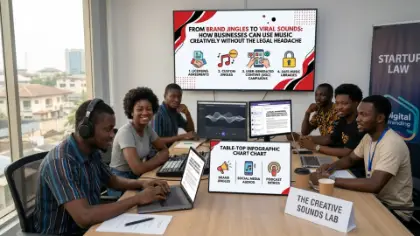
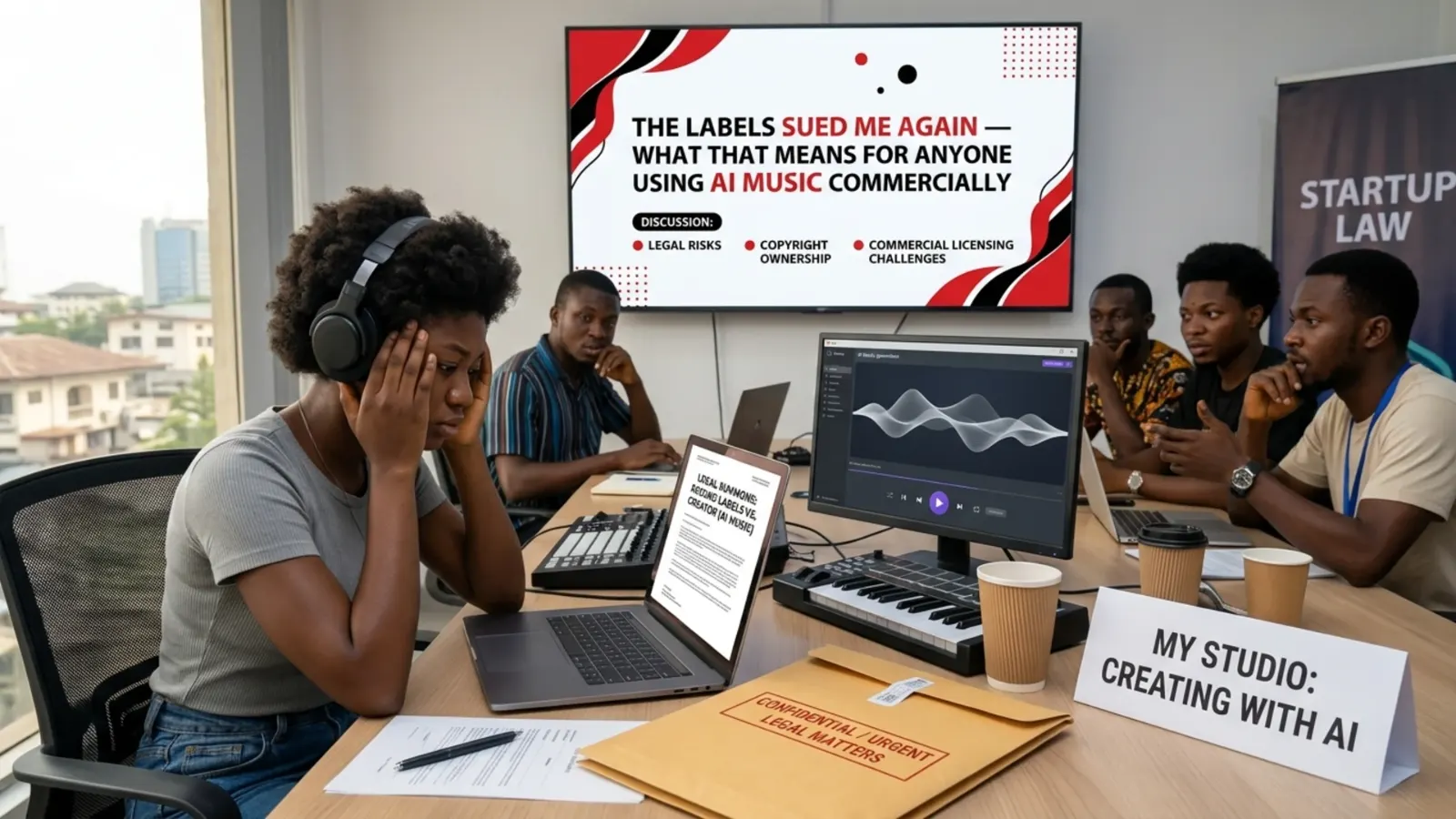
If you have ever used an AI music generator to create background music for a podcast, YouTube video, product demo or business advertisement, there is one question you probably didn't think about enough:
Recent legal disputes involving AI music companies and major record labels have brought that question back into focus.
👉 GET YOUR WEBSITE BUILT IN 72 HOURS
For casual listeners, lawsuits between music companies and AI platforms can feel like another chapter in the rapidly developing AI industry.
For a business owner or creator, however, the issue is much more practical.
Imagine creating a promotional video for your business, adding an AI-generated soundtrack and publishing it across your social media channels. The video performs well, customers start sharing it and you decide to use it in a paid advertisement.
Then a rights dispute emerges around the music.
Suddenly, the question isn't whether the song sounds good.
It's whether you can legally use it.
That is one of the complications businesses and creators need to consider as AI-generated music becomes easier to produce.
AI music tools can generate songs, instrumentals, jingles and background tracks in minutes. For a small business, this can seem like an attractive alternative to commissioning original music or licensing an existing track.
But "AI-generated" doesn't automatically mean "free to use."
The legal situation surrounding AI-generated music can depend on several factors, including the platform's terms, how the music was generated, the rights attached to the underlying training material and the laws that apply in the country where the content is being used.
That means creators shouldn't assume that a download button is the same thing as a commercial licence.
This is particularly important for businesses.
Personal experimentation is one thing. Commercial publication is another.
If you are creating music simply to test an AI tool, the consequences of a rights dispute may be limited. But once that music becomes part of an advertisement, branded video, podcast, online course, product or monetised channel, the stakes can change.
Before using an AI-generated track commercially, there are several questions worth asking.
What does the platform's licence actually allow?
Don't rely solely on the fact that a platform offers a commercial-use option. Read the applicable terms and understand what rights are granted, to whom and under what conditions.
Does commercial use cover your particular project?
A licence may have conditions or exclusions. A creator using music for a YouTube channel may have different requirements from a company using the same music in a national advertising campaign.
Can you document where the music came from?
Keeping records of the platform used, the date the track was created and the applicable terms can help establish what you relied on when publishing the work.
Are you comfortable with the remaining legal uncertainty?
This is perhaps the biggest question.
AI music technology is developing faster than many of the legal frameworks surrounding it. As courts, lawmakers, music companies and AI platforms continue to address copyright and licensing questions, the rules may continue to evolve.
For businesses, that uncertainty is worth taking seriously.
The solution isn't necessarily to stop using AI music.
Instead, treat AI-generated music like any other commercial asset: understand the rights before you publish it.
AI can still be a powerful creative tool. A business can use it to explore ideas for jingles, background music, promotional content and other creative projects.
Auxi Sherpa's Music & Song Creation service can also be useful for businesses and creators looking to explore AI-assisted music as part of their content strategy.
But the creative process should always be separated from the legal question.
A tool can help you create a track.
It doesn't automatically answer whether that track is appropriate for every commercial use.
As AI-generated music becomes more common, that distinction will become increasingly important.
The next time an AI tool gives you the perfect soundtrack for your business video, don't just ask:
"Does this sound good?"
Ask:
"Do I have the right to use it?"
Because when your content becomes commercial, the music isn't just background noise anymore.
It's an asset — and like every other business asset, you need to understand what you actually own or have permission to use.
👉 GET YOUR WEBSITE BUILT IN 72 HOURS
Email: admin@auxisherpa.com