Starting a business can make branding feel simple. You choose a business name, create a logo, put it on your social media pages and website, and you are ready to go.
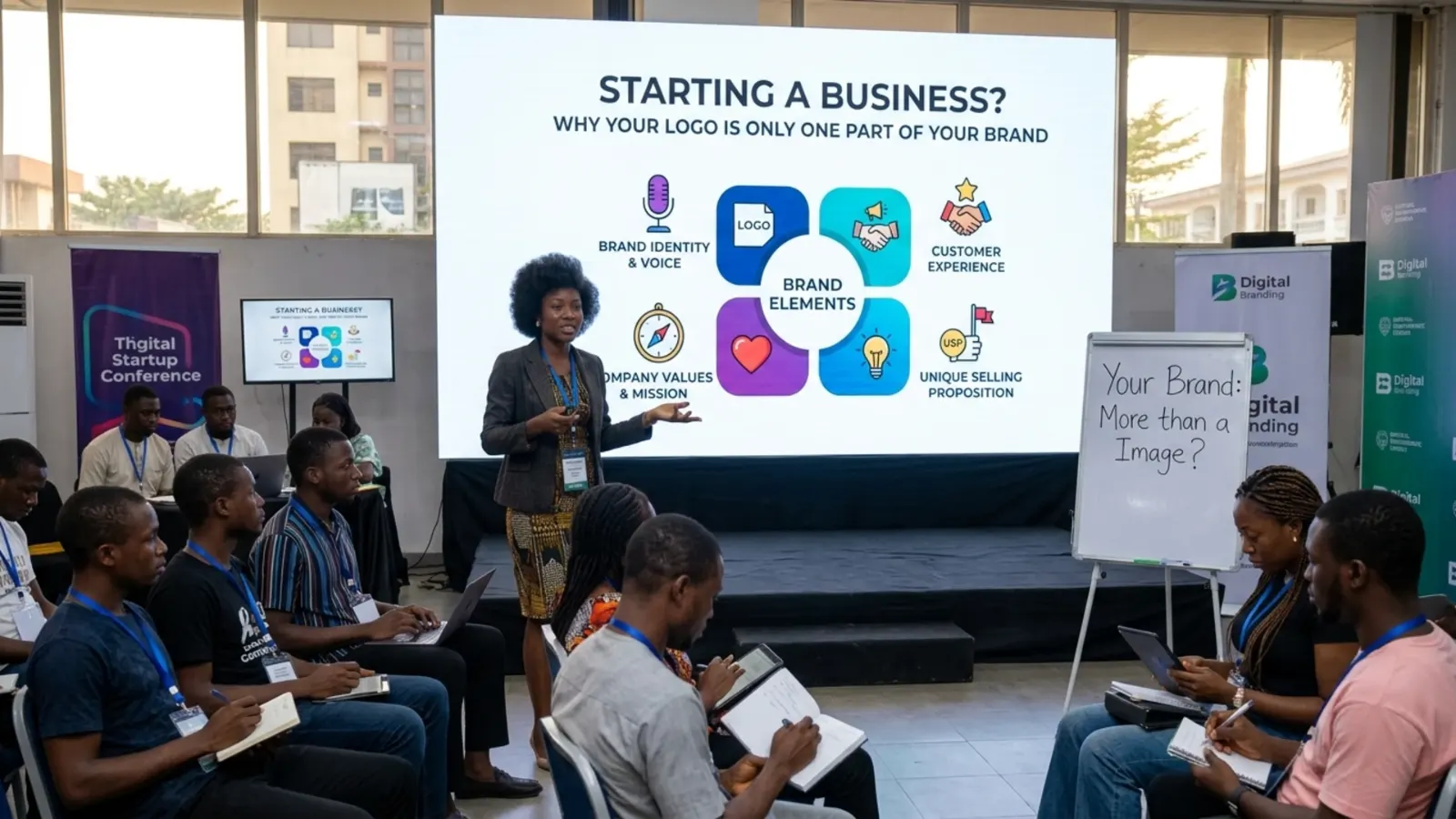
But there is a problem with that approach: a logo is only one part of a brand.
A logo is a symbol that helps people identify a business. A brand is the bigger experience people associate with that business.
That difference matters, especially now that AI has made it possible for almost anyone to create a professional-looking logo within minutes.
The temptation is understandable. You enter your business name into an AI design tool, select a style, choose a color and generate several options. You pick the one that looks best and move on to the next task.
But what happens when you start creating your website, Instagram posts, advertisements, business documents and other customer-facing materials?
Suddenly, you need to make dozens of design decisions.
Which colors should you use?
What fonts fit your business?
How should your social media graphics look?
Should your communication sound formal, friendly, playful or authoritative?
What type of imagery represents your business?
If you haven't answered those questions, your new logo may end up being the only consistent part of your brand.
And even that consistency can disappear quickly.
Think about a business that uses a blue logo on its website, bright red graphics on Instagram and completely different fonts in its promotional materials. Nothing is necessarily wrong with any individual design, but together they can make the business feel disconnected.
A strong brand identity gives those elements a common direction.
Your color palette can create consistency across your website and social media. Your typography can help establish a recognizable visual style. Your tone of voice can determine how your business communicates with customers. Your imagery and other brand assets can reinforce the same personality.
The result is a business that feels like one business wherever customers encounter it.
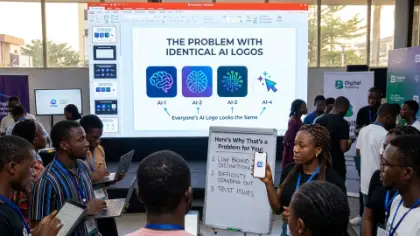
This is becoming even more important as AI-generated design becomes more common.
When thousands of businesses have access to similar tools, prompts and design trends, simply having an attractive logo may not be enough to make a business memorable.
The question becomes: what else makes your business recognisable?
For a new business owner, this doesn't mean spending a fortune on a traditional branding agency.
AI and automated branding tools can make it easier to develop several parts of a visual identity together.
This is where platforms such as Auxi Sherpa's automated branding and logo creation tool can be useful. Instead of treating the logo as an isolated graphic, the process can bring together elements such as the logo, colour palette and brand assets so they work as part of a more coherent identity.
That can be particularly useful for entrepreneurs who need to get a business online quickly but still want their branding to feel intentional.
Of course, technology doesn't replace the need for strategy.
Before creating your brand identity, you still need to understand who your customers are, what your business offers, what makes you different and how you want customers to perceive you.
Once those decisions are clear, design tools can help turn that thinking into something customers can actually see.
So, if you're starting a business, don't make the mistake of thinking that your branding journey ends when you download your logo.
The logo is the starting point, not the finish line.
A memorable business needs more than a symbol. It needs a visual identity and a consistent way of communicating that customers can recognise across every interaction.
Before your next launch, consider building the identity around the logo rather than building everything around the logo.
Try Auxi Sherpa's branding tool and explore how your logo, colours and brand assets can come together from day one.