
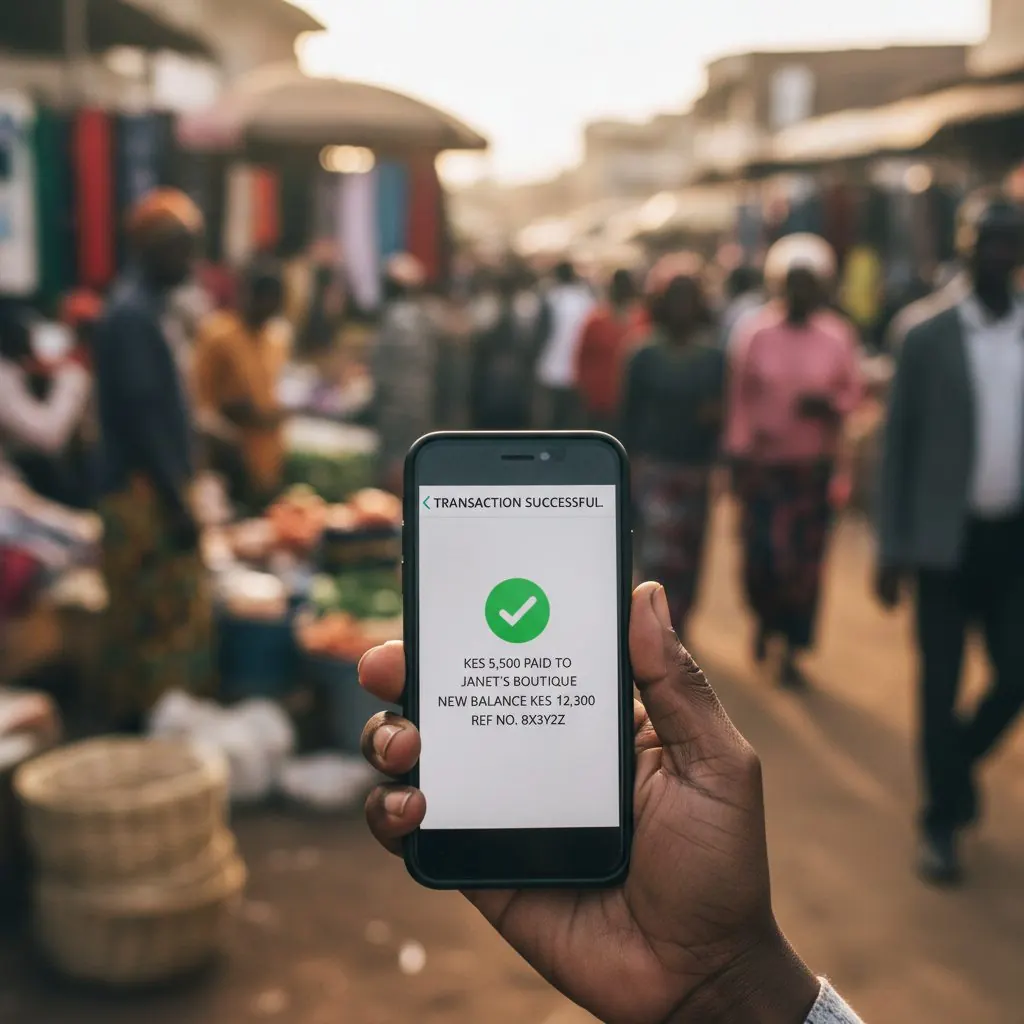
In East Africa, the widespread adoption of mobile money is fundamentally reshaping the landscape of Small and Medium-sized Enterprise (SME) lending, providing a data-rich foundation for financial institutions to extend credit where traditional banking channels have historically struggled. The extensive digital footprints left by daily mobile transactions are enabling innovative credit scoring models, unlocking vital capital for businesses previously deemed unbankable.
This development is not merely incremental; it represents a paradigm shift, as mobile money data offers a comprehensive, real-time view of an SME's financial activity, allowing lenders to mitigate risk and disburse loans with greater speed and precision.
Key takeaways
- Mobile money transaction histories are providing alternative credit scoring data for SMEs.
- Fintech companies and traditional banks are leveraging this data to expand their lending portfolios.
- Increased access to credit is fostering growth and formalization among small businesses.
- Regulatory frameworks are evolving to support data-driven lending while ensuring consumer protection.
- Partnerships between mobile network operators and financial institutions are crucial for scaling these solutions.
The Data Revolution in Credit Assessment
The ubiquity of mobile money in East African economies has inadvertently created a vast repository of financial data. For millions of small businesses, their entire commercial lives – from supplier payments to customer receipts – are conducted through mobile wallets. This digital trail provides an unprecedented level of insight into an SME's cash flow, operational consistency, and even seasonality.
Traditional credit assessment models often rely on formal financial statements, collateral, and extensive credit histories, which most SMEs in the informal sector lack. Mobile money data, however, offers an alternative. Lenders can analyze transaction volumes, frequency, average transaction size, and even relationships with other mobile money users to build a sophisticated risk profile. This granular data allows for the development of proprietary algorithms that predict repayment capabilities more accurately than conventional methods.
Industry operators report that the ability to access and interpret this data has significantly reduced the cost and time associated with loan origination. Instead of weeks or months, loan applications can now be processed and approved within days, sometimes even hours, directly through mobile platforms. This agility is critical for SMEs that often require immediate access to working capital to seize opportunities or manage unexpected expenses.
Expanding Financial Inclusion Through Digital Footprints
One of the most profound impacts of leveraging mobile money data is the dramatic expansion of financial inclusion. A significant proportion of East African SMEs operate informally, with limited or no access to formal banking services. This 'missing middle' has long been a challenge for economic development, as these businesses, despite their potential, are starved of the capital needed to grow.
Mobile money data bridges this gap. By demonstrating a consistent pattern of digital transactions, an informal business can establish a 'digital credit history' that serves as a proxy for traditional collateral or audited financial statements. This enables lenders to serve a segment of the market that was previously unaddressable, bringing more businesses into the formal financial ecosystem.
Founders interviewed in Kenya highlight how access to small, short-term loans, facilitated by their mobile money records, has allowed them to purchase more inventory, upgrade equipment, or expand their operations. This incremental access to capital creates a virtuous cycle: as businesses grow, their mobile money transaction volumes increase, further strengthening their credit profiles and enabling access to larger loans.
The broader economic implication is significant. As more SMEs gain access to finance, they are better positioned to create jobs, innovate, and contribute to national GDP. This democratizes access to capital, moving beyond established players to support a wider array of entrepreneurial activity. Auxi Sherpa News continues to cover these developments extensively, providing up-to-the-minute analysis on how technology is reshaping global commerce.
The Role of Fintech and Partnerships
The innovation driving this shift is largely spearheaded by fintech companies, which possess the technological agility to develop and deploy advanced data analytics and machine learning models. These firms often partner with established mobile network operators (MNOs) to access the raw transaction data, while also collaborating with traditional banks or microfinance institutions for capital and regulatory compliance.
These partnerships are symbiotic. Fintechs bring the data science and rapid deployment capabilities, MNOs provide the data and extensive customer reach, and banks offer the lending capital and regulatory infrastructure. This collaborative ecosystem is crucial for scaling data-driven lending solutions across diverse markets.
For instance, some platforms integrate directly into mobile money services, offering instant loan eligibility checks and disbursement directly to a mobile wallet. This seamless user experience further encourages adoption among SMEs. Such integrated services exemplify the kind of task automation that can streamline financial operations for small businesses.
Beyond direct lending, mobile money data is also being used to create other financial products tailored for SMEs, such as insurance or savings accounts, further deepening financial inclusion. The insights gleaned from transaction patterns can help design products that meet specific business needs, rather than relying on generic offerings.
Challenges and Regulatory Considerations
Despite the immense potential, the expansion of data-driven SME lending is not without its challenges. Data privacy and security are paramount concerns. Ensuring that sensitive transaction data is handled responsibly, anonymized where appropriate, and protected from breaches is critical for maintaining trust and compliance.
Regulatory frameworks are still catching up with these rapid technological advancements. Governments in East Africa are working to develop regulations that foster innovation while protecting consumers from predatory lending practices and ensuring fair access to credit. Striking this balance is crucial for the sustainable growth of the sector. Issues such as interest rate caps, data governance, and consumer recourse mechanisms are under active review.
Another challenge is the potential for algorithmic bias. If credit scoring models are built on incomplete or skewed data, they could inadvertently exclude certain segments of the population or perpetuate existing inequalities. Continuous monitoring and refinement of these algorithms are necessary to ensure equitable access to finance. This is where advanced AI deep research can play a vital role in identifying and mitigating biases.
Furthermore, digital literacy among SME owners remains a factor. While mobile money adoption is high, understanding the implications of data sharing and the terms of digital loans requires ongoing education and support. Some founders interviewed expressed a need for clearer communication around these digital financial products.
Future Outlook and Scalability
The trajectory for mobile money data-driven SME lending in East Africa is one of continued growth and sophistication. As mobile money platforms themselves evolve, incorporating more advanced features and deeper integrations, the data available for credit assessment will become even richer.
The use of machine learning and artificial intelligence is expected to become more prevalent, leading to even more precise risk assessments and personalized lending products. This will enable lenders to differentiate between various SME segments, offering more tailored and appropriate financial solutions. Our AI sales growth services provide similar data-driven insights for businesses looking to optimize their market approach.
Moreover, as more SMEs transition from informal to formal operations facilitated by digital finance, the opportunity for larger, longer-term loans will increase, fueling more substantial economic development. The success stories from East Africa are serving as blueprints for other emerging markets grappling with similar challenges in SME financing. The foundational shift has already occurred, setting the stage for a future where access to capital is determined by digital footprints rather than traditional barriers.
Frequently asked questions
How does mobile money data differ from traditional credit scoring methods?
Traditional credit scoring primarily relies on formal financial statements, collateral, and established credit bureau histories. Mobile money data, conversely, uses an individual or business's transaction history – deposits, withdrawals, payments, and transfers – conducted through mobile wallets. This provides insights into real-time cash flow, operational consistency, and financial behavior, especially for businesses lacking formal records or collateral.
What types of businesses primarily benefit from this new lending approach?
This approach primarily benefits Small and Medium-sized Enterprises (SMEs), particularly those operating in the informal sector or those that are newly established. These businesses often lack the formal documentation or extensive credit history required by traditional banks. Mobile money data allows them to build a digital financial identity and access crucial working capital or growth loans.
Are there risks associated with using mobile money data for lending?
Yes, there are several risks. Key concerns include data privacy and security, ensuring that sensitive transaction data is protected from misuse or breaches. There's also the risk of algorithmic bias, where models built on incomplete or skewed data could inadvertently exclude certain groups. Additionally, regulatory gaps and the potential for predatory lending practices by some actors need careful monitoring and robust oversight.
How can SMEs ensure they are building a strong mobile money data footprint for future loans?
SMEs can build a strong mobile money data footprint by consistently using mobile money for all business-related transactions, including receiving payments from customers, paying suppliers, and managing operational expenses. Maintaining a regular and active transaction history, even with small amounts, demonstrates financial activity and consistency, which lenders use to assess creditworthiness. Keeping records of these transactions can also be aided by services like virtual assistant services.
For businesses looking to navigate these dynamic financial landscapes or expand their operations, Auxi Sherpa offers a comprehensive suite of Auxi Sherpa services. Explore our full service directory, including options for business setup (UK, USA, Canada, Asia, Africa) and email marketing strategies, to optimize your enterprise's potential.