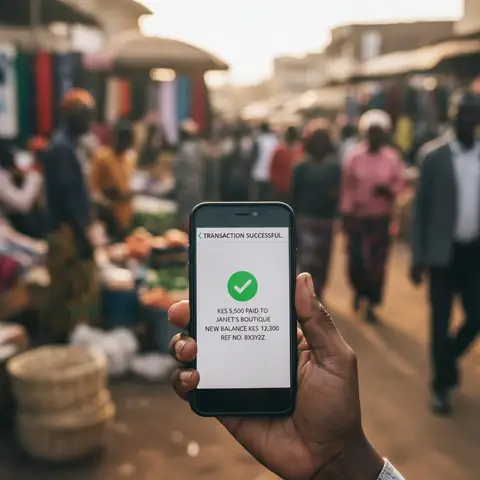

Africa's digital payment ecosystem is undergoing a profound transformation, fundamentally reshaping how commerce is conducted across the continent. This burgeoning sector is not only driving unprecedented financial inclusion but also catalyzing a wave of innovation that empowers individuals and businesses alike.
Key takeaways
- Mobile money remains the cornerstone of Africa's digital payment revolution, bridging gaps in traditional banking infrastructure.
- Interoperability and regulatory frameworks are evolving to create a more unified and accessible payment landscape.
- The growth of digital payments is directly fueling e-commerce expansion and the rise of new online business models.
- Financial inclusion is significantly improving, with millions gaining access to formal financial services for the first time.
- Innovations in fintech are attracting substantial investment, positioning Africa as a global leader in payment solutions.
Mobile Money's Enduring Dominance
From the bustling streets of Nairobi to remote villages, mobile money platforms have long been the primary driver of Africa's digital payment revolution. These platforms, initially conceived for simple remittances, have evolved into comprehensive financial ecosystems, offering services ranging from savings and loans to bill payments and merchant transactions. The ubiquity of mobile phones, even feature phones, has allowed these services to leapfrog traditional banking infrastructure, providing access to financial tools for millions previously excluded.
Industry operators note a consistent upward trend in transaction volumes and user numbers across various markets. This growth is particularly pronounced in countries with high smartphone penetration, where mobile money apps now compete with or integrate directly into banking applications. The convenience offered by these systems — the ability to send and receive money instantly, pay for goods and services, and access credit without a physical bank branch — has made them indispensable to daily life and commerce.
Founders interviewed for this report highlight the localized innovation that tailors mobile money services to specific market needs. These innovations often address challenges such as last-mile delivery payments, agricultural supply chain financing, and micro-insurance, demonstrating a deep understanding of local economic realities. The resilience and adaptability of these systems continue to underpin the continent's digital economy.
Paving the Way for Interoperability and Regulation
While the initial growth of digital payments was often characterized by fragmented platforms, there is a growing push towards greater interoperability. Governments and central banks across Africa are actively working on policies and infrastructure to allow different mobile money providers and traditional banks to seamlessly exchange funds. This move is critical for deepening financial markets and fostering greater competition, ultimately benefiting consumers and businesses.
The establishment of national payment switches and common platforms is a key area of focus. These initiatives aim to reduce transaction costs, improve efficiency, and expand the reach of digital payments. Regulatory bodies are also developing frameworks to ensure consumer protection, combat fraud, and promote fair practices within the rapidly expanding fintech sector. This evolving regulatory landscape is seen by many as a necessary step to sustain long-term growth and attract further investment.
“The next frontier for digital payments in Africa is not just about adoption, but about seamless integration across platforms and borders. This will unlock incredible economic potential,” remarked a leading fintech analyst in an interview.
Such integration is crucial for Auxi Sherpa services, particularly for businesses seeking to expand operations across diverse African markets, as it streamlines payment processing and financial management.
E-commerce and the Digital Payment Synergy
The proliferation of digital payment solutions has been a primary catalyst for the explosion of e-commerce across Africa. As more consumers gain confidence and familiarity with online transactions, the market for digital goods and services has expanded exponentially. Online marketplaces, ride-hailing services, food delivery platforms, and streaming services are all beneficiaries of a robust and accessible digital payment infrastructure.
Businesses, from small informal traders to large enterprises, are increasingly adopting digital payment acceptance methods. This shift reduces reliance on cash, mitigates security risks associated with handling physical money, and provides valuable data insights into consumer behavior. The ability to track sales digitally also helps businesses manage inventory more effectively and access financial services based on their transaction history.
Founders of e-commerce platforms frequently cite the ease of digital payments as a critical factor in their growth. It allows them to reach customers in areas without traditional banking infrastructure and enables frictionless transactions, which is vital for customer retention. This synergy between digital payments and e-commerce is creating new economic opportunities and fostering entrepreneurial activity across the continent, supporting ventures that might benefit from business setup (UK, USA, Canada, Asia, Africa) assistance.
Driving Financial Inclusion and Economic Empowerment
Perhaps the most significant impact of Africa's digital payments boom is its role in fostering financial inclusion. For decades, a large percentage of the African population was unbanked, limiting their ability to save, borrow, and participate fully in the formal economy. Mobile money and digital payment platforms have dramatically altered this landscape, bringing millions into the financial fold.
Access to digital payments means individuals can receive salaries, remittances, and government benefits directly, without the need for costly and time-consuming travel to urban centers. It also empowers small business owners and informal traders to accept payments digitally, improving their cash flow management and providing a digital footprint that can be used to access credit or other financial services. This economic empowerment has ripple effects, contributing to poverty reduction and improved livelihoods.
The data from various industry reports consistently show an increase in financial literacy and access to formal financial services coinciding with the expansion of digital payment networks. This trend is a testament to the transformative power of technology when applied to address fundamental economic challenges. Businesses seeking to capitalize on this expanding market can explore AI sales growth strategies to reach these newly included populations.
Innovation Beyond Payments: The Fintech Frontier
The success of digital payments has created a fertile ground for broader fintech innovation. Startups and established players are now leveraging the existing payment infrastructure to offer a range of new services, including micro-lending, digital insurance, investment platforms, and cross-border payment solutions. This innovative ecosystem is attracting significant local and international investment, solidifying Africa's position as a global leader in fintech.
The focus is increasingly on developing solutions that are hyper-localized, addressing specific challenges within African economies. This includes innovations in agricultural finance, health tech payments, and educational payment systems. The lessons learned from building resilient and accessible payment systems in challenging environments are now being applied to other sectors, promising further digital transformation.
The dynamism of this sector means that businesses often require agile support for everything from email marketing campaigns to AI deep research into market trends. The pace of change necessitates constant adaptation and innovation.
Frequently asked questions
What is the primary driver of digital payment growth in Africa?
The primary driver is the widespread adoption of mobile money platforms, which have provided financial access to millions previously unbanked due to limited traditional banking infrastructure. The high penetration of mobile phones across the continent has facilitated this growth.
How do digital payments contribute to financial inclusion?
Digital payments enable individuals and businesses to send and receive money, pay bills, and access other financial services like savings and credit without needing a physical bank account. This brings more people into the formal financial system, improving their economic prospects.
What role does regulation play in this boom?
Evolving regulatory frameworks are crucial for ensuring consumer protection, combating fraud, promoting fair competition, and fostering interoperability between different payment platforms. This creates a stable environment for sustainable growth and investment.
What future trends are expected in Africa's digital payment landscape?
Future trends include greater interoperability between platforms, expansion into cross-border payments, continued integration with e-commerce, the emergence of more sophisticated fintech products like micro-investments and digital insurance, and increased use of data analytics to tailor services.
Stay informed about the latest developments in African technology and business by visiting Auxi Sherpa News. For businesses looking to navigate and thrive in these dynamic markets, Auxi Sherpa offers a full service directory, including virtual assistant services for operational support and task automation to streamline digital processes.