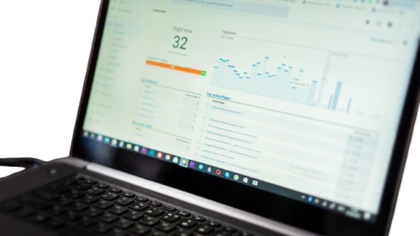

A slow website can lose a customer before the customer even sees what you offer. People click a link expecting a page to appear quickly, and when it keeps loading, many simply leave. For me, website speed is not just a technical detail; it is part of the overall experience a business gives its visitors.
The good news is that improving loading speed does not always require rebuilding an entire website. Sometimes the biggest improvements come from fixing a few things that are unnecessarily making the pages heavy.
Images are one of the first places I check. High-resolution photographs can look excellent but become a problem when they are uploaded without being resized or compressed. Using appropriately sized images and modern formats can reduce the amount of data a visitor has to download.
The same applies to videos. Automatically loading large videos on a homepage can consume a lot of resources. In many cases, a still image with a play button or a properly optimized video setup gives visitors a smoother experience.
The website itself should also avoid unnecessary features. Extra animations, large scripts, excessive plugins and unused elements can add weight without providing much value. When building quickly, having a clear scope helps prevent unnecessary additions from slowing the project down. What makes a 72-hour website project successful explains why planning matters when time is limited.
Mobile users deserve particular attention. Someone visiting through a phone may be using mobile data or dealing with a weaker connection. A page that feels acceptable on a fast desktop connection can feel frustrating on a mobile network. That is why mobile-friendly website development should consider both appearance and performance.
Hosting also plays a role. A properly configured hosting environment can help a website respond efficiently, while poor hosting can contribute to slow response times. Caching, compression and sensible server configuration can also improve how quickly returning visitors receive content.
Another simple area to examine is the number of resources a page needs before it becomes usable. If a homepage is trying to load multiple fonts, scripts, tracking tools, sliders and large media files at once, there is more work to complete before the visitor gets a smooth experience.
Website structure matters too. A business does not need dozens of pages simply for the sake of having them. The right pages should answer customer questions and support the purpose of the site. Understanding what pages can be built in a 72-hour website can help businesses decide what is actually necessary.
I also believe speed should be considered during development rather than treated as an emergency after launch. When performance is part of the planning process, developers can make better decisions about images, layouts, features and content from the beginning. This fits naturally with how to prepare for a 72-hour website project.
Testing is just as important. A website may feel fast on the developer's computer but behave differently for someone using another device or network. Checking the actual pages, images, menus and forms before launch can reveal problems that are easy to miss during development.
A faster website also does not have to look plain. Good design and performance can work together when the site is built with purpose. Can a fast website still look premium? is useful for anyone concerned that a lightweight website must sacrifice visual quality.
For businesses that need to get online quickly, performance should be included in the project from day one. A focused website with a clear scope can be professionally built, optimized and ready within 72 hours rather than spending weeks on unnecessary features.
The final cost depends on the pages, functionality, design requirements and other project details. How much does a website built in 72 hours cost gives more context on what can affect the price.
If the goal is simply to get a business online quickly without ignoring performance, Auxi Sherpa's 72-hour website serviceprovides a straightforward place to begin.
Email: admin@auxisherpa.com