
A website can look excellent and still fail at the one thing that matters most to many businesses: giving potential customers an easy way to make an enquiry. Someone may like what they see, have a genuine question, or be ready to request a quote, but if they cannot quickly find how to contact you, they may simply leave.
That is why I see customer enquiries as something that should be considered from the beginning of a website project, not added as an afterthought.
The first thing I would decide is what type of enquiry the business actually wants. A cleaning company may need customers to request a quote. A consultant may want people to book a consultation. A real estate business might need property enquiries, while a school could receive admission questions.
The website should make that next step obvious.
For example, a simple “Request a Quote”, “Ask a Question”, “Book a Consultation”, or “Talk to Us” button can be much more useful than leaving visitors to search around for a phone number or email address. This is closely connected to website design for lead generation, because the layout should help visitors move naturally from interest to enquiry.
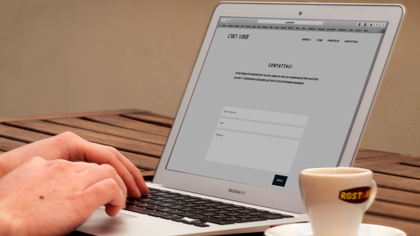
A good enquiry system also does not need to be complicated. In many cases, a short form is enough. Ask for the person's name, email or phone number, what they need, and perhaps one or two details that help the business respond properly. Long forms can create unnecessary friction, especially when someone is visiting from a phone.
The placement matters too. I like enquiry options to appear where they make sense rather than putting one form at the bottom and expecting everyone to find it. A service page can have its own enquiry button. A pricing section can lead to a quote request. A contact page can contain the full form. Someone reading about a particular service should not have to return to the homepage just to ask a question.
A dedicated website with contact form and lead capture can make this process much easier to organise. The important part is making sure submitted enquiries actually reach the business. A beautiful form that does not send notifications properly is worse than having no form at all because it creates the impression that customers can contact you when they actually cannot.
There is also a place for direct communication. Some customers prefer sending a WhatsApp message instead of completing a form, especially when they have a quick question. Adding WhatsApp to a business website gives visitors another route without forcing everyone into the same contact method.
Trust plays a big part in whether someone decides to enquire. Clear service information, genuine business details, testimonials where appropriate, professional images, and an easy-to-understand offer can remove some of the hesitation a visitor may have. The website does not have to be overloaded with information; it needs enough useful information to help the visitor feel comfortable taking the next step.
The pages themselves should support that journey. A business might need a homepage, services page, about page, contact page, pricing information, portfolio, FAQ, booking page, or other relevant sections. The right combination depends on what the business sells. This is why it helps to understand what pages can be built in a 72-hour website before deciding on the final structure.
Mobile users deserve special attention. If the enquiry button is difficult to tap, the form fields are awkward, or the page takes too long to load, potential customers can disappear before submitting anything. The enquiry process should work comfortably on a smartphone, not just on a desktop screen.
I also think businesses should decide what happens after an enquiry is submitted. Does the customer receive a confirmation message? Who receives the notification? How quickly will someone respond? Is the enquiry stored somewhere for follow-up? These details may seem small, but they affect whether website leads are actually useful to the business.
The good news is that creating this type of website does not have to become a long development project. With the content, branding, contact details, images, services, and preferred enquiry method prepared in advance, the work can move much faster. How to prepare for a 72-hour website project covers the kind of information that can help keep the process moving.
A fast project still needs to look professional and function properly. The fact that a website is being developed quickly should not mean ignoring its layout, mobile experience, enquiry forms, or customer journey. A professional website can really be built in 72 hours, provided the project is properly organised and the required materials are available.
For businesses that depend on enquiries, the goal should be simple: make it easy for the right visitor to take action. Give them enough information to understand the offer, provide a clear way to reach you, keep the form straightforward, and make sure every submission gets to the right person.
If you already have your business information and content ready, your website can be completed and ready within 72 hours, including the enquiry features your customers need.