
When starting a business, it is easy to spend hours thinking about the perfect logo.
You want something attractive, memorable and professional enough to make customers take your business seriously.
But how much should you actually spend?
Some logo options are available at little or no cost, while custom design work can cost considerably more.
The right budget depends on your business stage, the complexity of the design, the level of professional support required and how the logo will be used.
For a business that is just testing an idea, a simple and affordable logo may be a reasonable starting point.
An entrepreneur selling a small range of products locally may need a clean design that works on social media, product labels and basic promotional materials.
At this stage, spending a large amount on an elaborate visual identity may not be the best use of limited funds. The business may benefit more from understanding its customers, improving its products and making its first sales before investing heavily in branding.
However, choosing the cheapest option without considering quality can create problems.
A logo that looks good on a phone screen may become difficult to read on a signboard or printed package.
A design may use colours that do not reproduce well, contain small details that disappear at different sizes or rely on artwork that the business cannot legally use. If the business grows and needs a more adaptable identity, it may eventually have to pay for a redesign.
The initial saving can become less attractive if the original work cannot meet the business’s needs.
The price of a logo depends on what is included. A basic logo service may provide one design with limited customisation, while a more comprehensive package may include research, multiple concepts, revisions, typography and a broader visual identity.
Some designers also provide files for print and digital use, brand guidelines and supporting graphics.
These deliverables can be valuable, but a small business should not pay for features it does not need. Before agreeing to a price, ask what files will be supplied, how many revisions are included and whether the design can be used commercially.
The business’s stage and plans should influence the budget. A small home-based service business may need a simple identity that can be improved as the company grows.
A business preparing to launch a product line, enter a competitive market or approach larger clients may benefit from a more considered branding process.
In that situation, the logo may need to work across packaging, websites, uniforms, advertising and other materials. A larger investment may be justified if it produces a flexible design that supports the business over time.
There are several ways to obtain a logo.
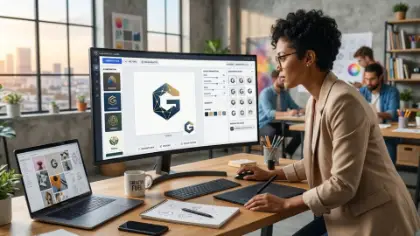
A business owner can use a do-it-yourself design tool, try an AI logo generator, purchase a template or hire a professional designer.
Free and low-cost tools can help people experiment with ideas, but their outputs may offer limited customisation or resemble designs used by other businesses.
AI tools can speed up concept development, although the results still need to be checked for quality, originality and suitability. A professional designer can offer more tailored work, but the price and scope vary. No option is automatically best for every business.
Before spending money, decide what the logo must do. It should be easy to recognise, readable at different sizes and appropriate for the audience and industry.
Think about where it will appear, including websites, social media profiles, printed materials and product packaging. It is also important to check the ownership and usage terms of the design, including any fonts, icons or stock elements.
A logo does not automatically grant trademark rights, and businesses should research potential conflicts before building a brand around a design.
A sensible logo budget should sit within a broader business budget. Consider the costs of website development, product photography, marketing, packaging and customer acquisition alongside branding.
Do not spend so much on a logo that you have little money left to tell people your business exists.
At the same time, avoid treating visual identity as meaningless decoration. A professional, consistent appearance can help customers recognise the business and understand that care has been taken with its presentation.
Auxi Sherpa helps businesses explore digital tools and creative solutions that support their online presence. Entrepreneurs who need a logo can begin by defining their business name, audience, personality and practical design requirements.
They can then compare DIY tools, AI-generated concepts and professional services based on cost, flexibility and usage rights. Starting with a clear brief makes it easier to spend wisely and choose a design that fits the business rather than paying for features that do not serve its needs.
There is no universal amount every small business should spend on a logo.
The right investment is one that the business can afford, provides the files and rights it needs, and creates an identity suitable for its current goals and future growth.
A logo matters, but it works best as part of a wider effort to deliver a good product, communicate clearly and give customers a reason to trust the business.
See you at the top
Auxi Sherpa