
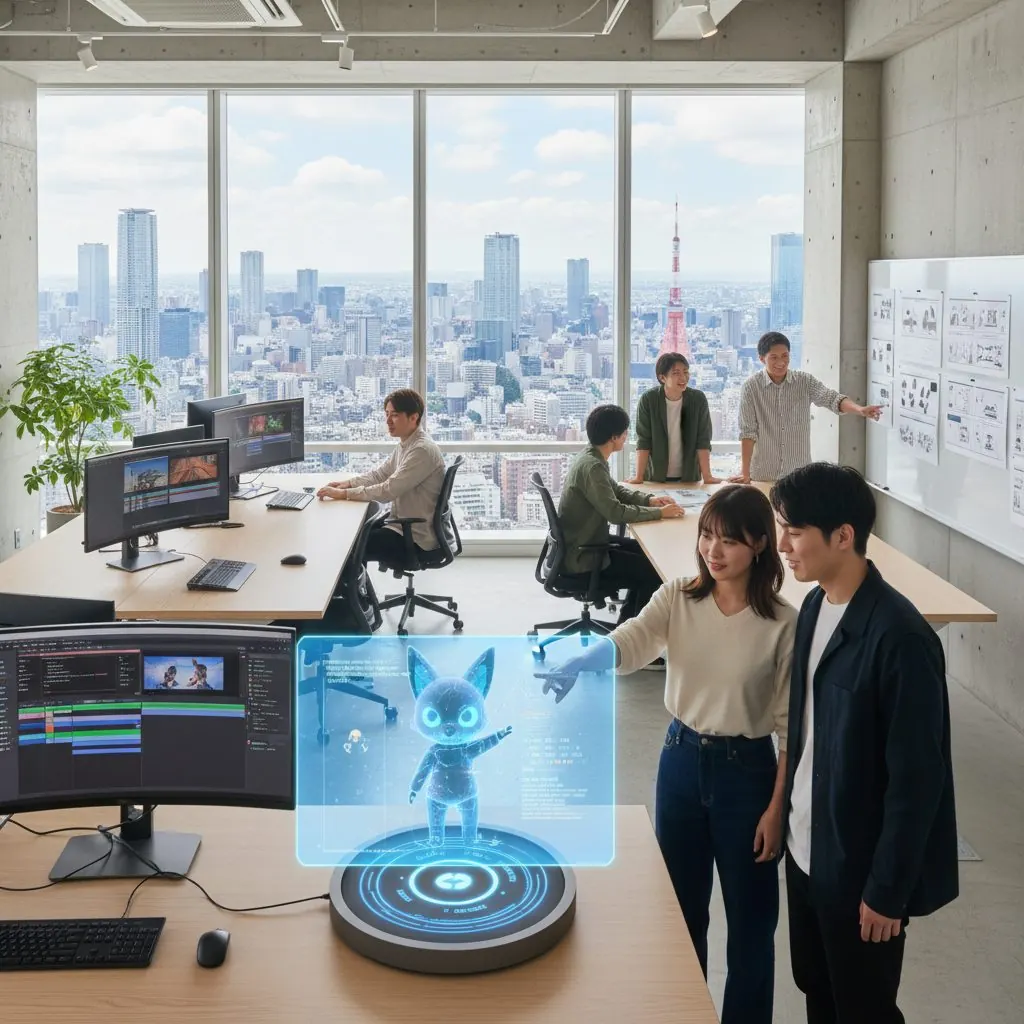
AI video production is rapidly transforming the landscape of brand storytelling, fundamentally collapsing the costs associated with creating high-quality visual content and democratizing access to sophisticated narrative tools. This technological leap allows businesses of all sizes to produce engaging video assets with unprecedented speed and efficiency, reshaping traditional marketing paradigms.
Key takeaways
- AI tools are significantly lowering the financial and time barriers to professional video production, making sophisticated brand narratives accessible to more companies.
- From script generation to voiceovers and animation, AI now automates numerous stages of the video creation process, freeing up human creatives for strategic oversight.
- The speed of AI-driven content generation enables rapid iteration and A/B testing of video campaigns, optimizing marketing effectiveness in real-time.
- Industry operators report a dramatic shift towards internalizing video production capabilities, reducing reliance on external agencies for routine content.
- The rise of AI video necessitates new skills for marketing teams, focusing on prompt engineering, ethical AI use, and strategic narrative development rather than traditional technical production roles.
The Democratization of High-Quality Visual Content
For decades, producing high-quality video content was a costly and time-consuming endeavor, often requiring significant budgets, specialized equipment, and skilled personnel. This reality limited sophisticated brand storytelling to larger corporations or those willing to invest heavily. The advent of advanced AI video production platforms has dramatically altered this dynamic, ushering in an era where professional-grade visuals are within reach for a much broader spectrum of businesses, including small and medium-sized enterprises (SMEs) and startups.
Founders interviewed across Asia highlight how AI tools now handle tasks that once required dedicated specialists: scriptwriting, voiceover narration, animated character generation, scene composition, and even basic editing. One Tokyo-based startup founder noted, "What used to take weeks and tens of thousands of dollars can now be prototyped in days for a fraction of the cost using AI. It's a game-changer for our ability to tell our story." This shift is not merely about cost reduction; it's about empowering businesses to articulate their brand identity and value propositions through compelling visual narratives without prohibitive entry barriers. This democratization supports a more level playing field in digital marketing, where creativity and strategic messaging can shine, unhindered by production constraints. Companies looking to leverage these advancements might explore Auxi Sherpa services to navigate the complex landscape of AI tools and integrate them effectively into their content strategies.
Streamlining the Production Workflow: From Concept to Completion
AI's impact on video production extends across the entire workflow, from initial concept generation to final delivery. In the ideation phase, AI algorithms can analyze market trends, competitor content, and audience engagement data to suggest optimal video themes, scripts, and calls to action. Natural Language Processing (NLP) models can then draft compelling scripts, complete with scene descriptions and dialogue, often generating multiple variations for creative exploration.
Once a script is approved, AI takes over many of the labor-intensive production steps. Text-to-speech engines now produce incredibly lifelike voiceovers in multiple languages and accents, eliminating the need for expensive voice talent and recording studios. AI-powered animation tools can generate complex character movements, facial expressions, and environmental effects from simple text prompts or rudimentary sketches. Background music and sound effects can be dynamically generated and adapted to the video's mood and pacing. Moreover, AI editing tools can perform initial cuts, synchronize audio and video, and even suggest optimal pacing and transitions based on audience engagement data. This end-to-end automation significantly reduces the time from concept to a deployable video asset. "Our content team can now produce three times the video volume with the same human resources, focusing on refining the narrative and strategic elements rather than manual labor," commented an industry executive in Singapore. For businesses seeking to optimize their operational efficiency further, exploring task automation services can provide additional benefits.
Enhanced Personalization and Localization at Scale
One of the most powerful implications of AI video production is the ability to personalize and localize content at an unprecedented scale and cost. Traditional video production made it impractical to create multiple versions of a single advertisement or explainer video tailored to specific demographics, languages, or cultural nuances. AI bypasses these limitations by allowing rapid generation of variations.
Imagine a global brand launching a new product. Instead of producing one generic commercial, AI can quickly generate hundreds of versions, each featuring a different spokesperson, language, cultural setting, or product highlight, precisely tuned to specific target markets or even individual customer segments. This hyper-personalization drives significantly higher engagement rates and return on investment. Founders in Europe are already experimenting with AI to create localized marketing campaigns, noting that "the ability to speak directly to customers in their native language with culturally relevant visuals without breaking the bank is a massive competitive advantage." Furthermore, AI can learn from user interaction data to dynamically adjust future content, ensuring ongoing relevance. This capability is particularly relevant for businesses expanding into new territories, where services like business setup (UK, USA, Canada, Asia, Africa) coupled with localized content strategies can prove invaluable.
The Shifting Role of Human Creatives and Strategic Oversight
While AI automates many aspects of video production, it does not diminish the need for human creativity and strategic oversight; rather, it elevates it. The role of human creatives is shifting from tedious, manual tasks to higher-level strategic thinking, narrative development, and ethical guidance. Instead of spending hours on editing or animating, content creators are now focused on crafting compelling prompts for AI tools, ensuring brand consistency, overseeing the artistic direction, and developing innovative storytelling approaches that resonate with audiences.
Industry operators emphasize that AI is a powerful co-pilot, not a replacement. "The creative director's job is now about being a master orchestrator of AI tools, guiding the technology to realize a vision, rather than being bogged down in production minutiae," explained a creative agency head in Seoul. This pivot requires new skill sets, including 'prompt engineering' – the art and science of communicating effectively with AI models to achieve desired outputs. Ethical considerations surrounding AI-generated content, such as preventing bias, ensuring authenticity, and managing intellectual property, also become paramount, requiring human oversight and judgment. Businesses looking to empower their teams with these new capabilities might consider virtual assistant services to handle routine tasks, allowing in-house talent to focus on strategic AI integration. For a comprehensive list of tools and support, one might consult a full service directory.
Impact on Marketing Budgets and ROI
The most immediate and tangible impact of AI video production is on marketing budgets and the potential for increased return on investment (ROI). By drastically reducing the need for expensive equipment, studio time, specialized labor, and prolonged production cycles, AI enables companies to stretch their marketing dollars further. This efficiency means more content can be produced for the same budget, or existing budgets can be reallocated to other strategic initiatives, such as enhanced distribution or deeper audience research.
The ability to rapidly generate and test multiple video variations also leads to more effective campaigns. Marketers can A/B test different intros, calls-to-action, or narrative styles in real-time, quickly identifying what resonates best with their target audience and optimizing campaigns for maximum impact. This agile approach minimizes wasted ad spend on underperforming content. For businesses focused on quantifiable results, integrating AI video production with AI sales growth strategies can create a powerful synergy, driving both brand awareness and direct conversions. Furthermore, the capacity for high-volume content creation feeds into robust email marketing campaigns, providing a constant stream of fresh, engaging visuals to nurture leads and retain customers.
Frequently asked questions
How does AI specifically reduce video production costs?
AI reduces costs by automating labor-intensive and expensive stages of video production. This includes generating scripts and storyboards, creating realistic voiceovers in multiple languages, animating characters and scenes from text prompts, and performing initial video editing. These capabilities minimize the need for external voice talent, animators, editors, and studio time, which traditionally represent significant budgetary outlays. The speed of AI also means fewer human hours are required for overall project completion.
Can AI generate unique and creative video content, or is it limited to templates?
Modern AI models are increasingly sophisticated, moving beyond simple template-based generation. Advanced generative AI, particularly large language models (LLMs) and diffusion models, can create highly unique and diverse content based on detailed prompts, style references, and brand guidelines. While templates can provide a starting point for efficiency, human creatives can guide AI to produce bespoke narratives, custom animations, and distinct visual styles that align with specific brand identities. The 'creativity' lies in the effective human guidance and iterative refinement of AI outputs.
What are the main challenges or ethical considerations with AI video production?
Key challenges include ensuring the authenticity and originality of AI-generated content, preventing the propagation of biases embedded in training data, and addressing intellectual property rights. Concerns also arise regarding the potential for 'deepfakes' and misinformation. Ethical considerations demand transparent disclosure of AI involvement, careful prompt engineering to avoid harmful outputs, and robust human oversight to maintain brand integrity and adhere to ethical guidelines. Data privacy and security for input assets are also crucial considerations.
Is AI video production suitable for all types of businesses and content?
AI video production is increasingly versatile and can benefit a wide range of businesses, from small e-commerce sites needing product demos to large corporations requiring internal communications or marketing campaigns. It's particularly impactful for businesses that need to produce high volumes of content, personalize messaging, or localize content for diverse audiences. While AI excels at routine and semi-creative tasks, highly artistic, nuanced, or complex narrative projects still benefit significantly from substantial human creative input and direction. However, even these projects can leverage AI for efficiency in certain stages.
For businesses keen to harness the power of AI in their content strategy and beyond, Auxi Sherpa offers a range of specialized services. Discover how AI deep research can inform your next campaign or explore other offerings on Auxi Sherpa News for the latest insights.