
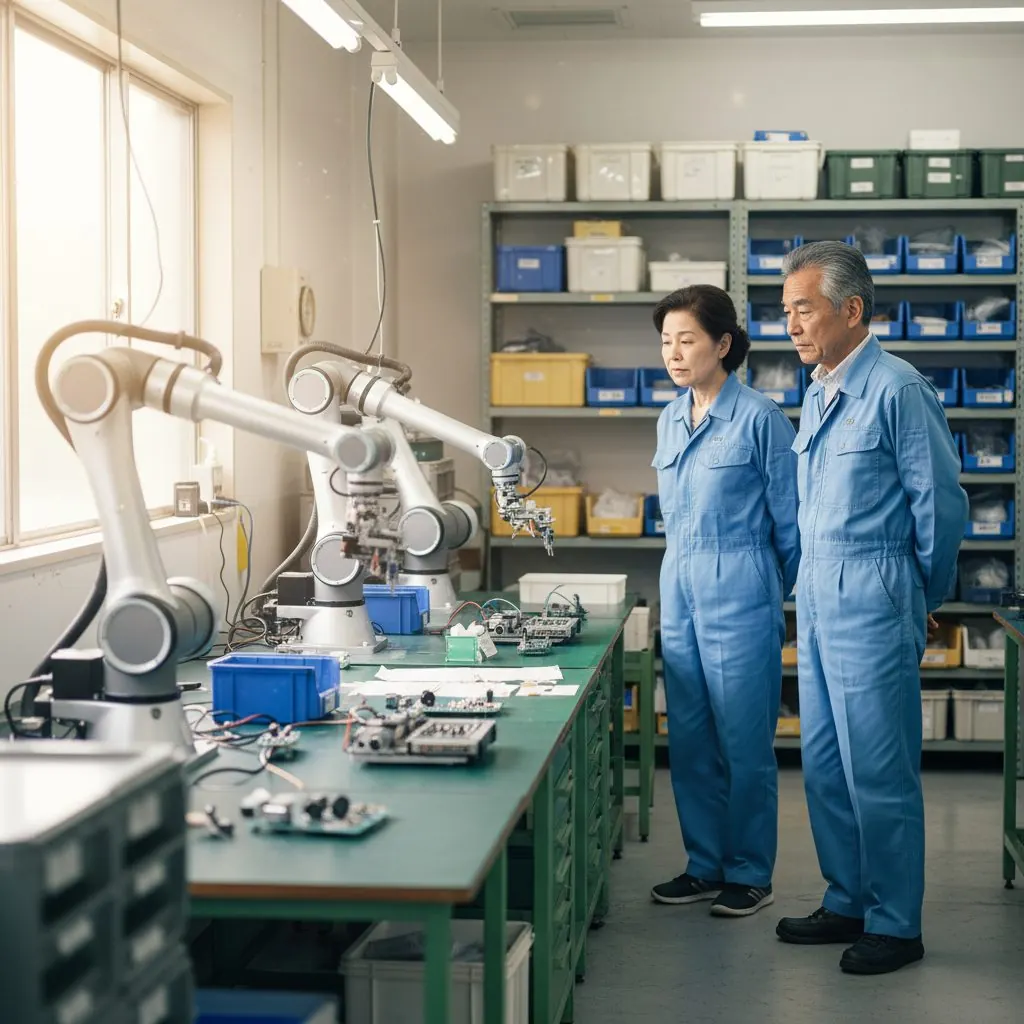
Japan's small and medium-sized enterprises (SMEs) in the manufacturing sector are making substantial investments in robotics, recognizing automation as a critical strategy to address severe labor shortages and maintain global competitiveness. This strategic pivot is transforming traditional workshops into high-tech environments, ensuring the survival and evolution of a vital segment of the nation's economy.
This shift is not merely about efficiency; it is a fundamental re-evaluation of business models driven by demographic realities and the relentless pace of technological advancement.
Key takeaways
- Japanese SMEs are adopting robotics to counter a shrinking and aging workforce, ensuring operational continuity.
- Government incentives and supportive ecosystems are facilitating the integration of advanced automation technologies.
- The initial high cost of robotics is a significant barrier, but long-term benefits like increased productivity and quality are proving compelling.
- Robotics adoption is not eliminating human jobs but is re-skilling the workforce for higher-value tasks and collaborative roles.
- This trend positions Japan's SMEs to maintain their competitive edge in a global manufacturing landscape increasingly defined by automation.
The Demographic Imperative for Automation
Japan faces one of the world's most rapidly aging populations, leading to a shrinking workforce and acute labor shortages, particularly in demanding sectors like manufacturing. For SMEs, which form the backbone of Japan's economy and often specialize in high-precision, niche components, finding skilled labor has become an existential challenge. Industry operators indicate that attracting young talent to factory floor jobs is increasingly difficult, making automation a necessity rather than a luxury.
Robotics offers a solution by taking over repetitive, strenuous, or dangerous tasks, allowing existing human workers to focus on oversight, quality control, and more complex problem-solving. Founders interviewed consistently highlight that without automation, many businesses would simply be unable to meet production demands or would face unsustainable increases in labor costs. This demographic pressure has accelerated the adoption curve for robotics, even among smaller firms traditionally hesitant to invest heavily in technology.
The imperative extends beyond simple replacement. Robots can operate continuously with consistent precision, leading to higher output and fewer defects, which are crucial for maintaining the stringent quality standards expected from Japanese manufacturers. This ability to ensure consistency and scale production without a proportional increase in human labor is a primary driver behind the current investment wave.
Government Support and Ecosystem Development
Recognizing the strategic importance of SMEs and the transformative potential of robotics, the Japanese government has introduced various initiatives to ease the financial burden and facilitate technological adoption. These include subsidies, tax incentives, and low-interest loans specifically targeted at SMEs investing in automation and digital transformation. Beyond direct financial aid, there is also a focus on creating supportive ecosystems.
Universities and research institutions are collaborating with industry to develop more affordable, user-friendly robotic solutions tailored to the needs of smaller manufacturers. This includes advances in collaborative robots (cobots), which are designed to work safely alongside humans without extensive safety caging, making them ideal for flexible production environments typical of SMEs. Furthermore, training programs are being established to re-skill workers in programming, operating, and maintaining these advanced systems, ensuring a smooth transition.
These government and institutional efforts are crucial for de-risking investments for SMEs, many of which operate on tight margins and have limited in-house expertise for technology integration. The collective aim is to foster an environment where even the smallest workshops can access and deploy cutting-edge robotic solutions, reinforcing Japan's global leadership in high-tech manufacturing.
Overcoming the High Cost Barrier
Despite the clear benefits and government support, the initial capital expenditure for robotics remains a significant hurdle for many SMEs. Robotic systems, while increasingly affordable, still represent a substantial investment, especially when factoring in integration costs, software, and training. However, industry operators are observing a shift in perspective, where businesses are increasingly viewing these as long-term strategic investments rather than immediate expenses.
“For many years, the cost was simply too high for us to consider,” states the founder of a precision components manufacturer in Saitama. “But with rising labor costs and difficulty finding staff, the return on investment has become clear. We can’t afford *not* to automate.”
The return on investment (ROI) is being realized through several channels: reduced labor costs in the long run, increased production capacity, improved product quality leading to fewer reworks, and the ability to operate 24/7. Moreover, the modularity and flexibility of modern robotic systems allow SMEs to start with smaller, less expensive deployments and scale up as their needs and financial capabilities grow. This incremental approach helps manage the financial risk and allows businesses to adapt to automation gradually.
Leasing options and pay-per-use models for robotics are also emerging as viable alternatives to outright purchase, further lowering the entry barrier for SMEs. These financial innovations, coupled with the proven long-term benefits, are making the investment case for robotics increasingly compelling across the sector.
Robotics and the Evolving Workforce
A common concern with automation is the potential for job displacement. However, for Japanese SMEs, the reality appears to be more nuanced. Faced with labor shortages, robots are often filling positions that are difficult to staff, rather than replacing existing workers. Furthermore, the integration of robotics is creating new types of jobs and demanding new skills from the workforce.
Workers are being retrained to operate, program, and maintain robotic systems, moving away from repetitive manual tasks to supervisory and problem-solving roles. This re-skilling not only future-proofs the workforce but also elevates the nature of work, making manufacturing jobs potentially more appealing to a younger generation seeking intellectually stimulating careers. Task automation is a key driver here, enabling human workers to focus on higher-value activities.
Some firms are implementing collaborative robotics, where humans and robots work side-by-side, each contributing their unique strengths. Robots handle precision and repetition, while humans provide dexterity, judgment, and adaptability. This human-robot collaboration enhances overall productivity and allows SMEs to undertake more complex and customized manufacturing projects, diversifying their offerings and improving competitive posture. For more insights on how businesses are evolving, visit Auxi Sherpa News.
Maintaining Global Competitiveness
Japan's manufacturing sector has historically been renowned for its quality and innovation. However, intense competition from other Asian economies, coupled with domestic challenges, has put pressure on its global standing. The strategic embrace of robotics by SMEs is crucial for maintaining this competitive edge.
By automating, Japanese SMEs can produce goods at lower unit costs, with higher consistency, and faster turnaround times, allowing them to compete effectively on the global stage. This is particularly vital for companies that supply critical components to larger industries, where precision and reliability are paramount. Furthermore, the ability to rapidly reconfigure production lines using flexible robotic systems enables quicker adaptation to market changes and demands, a significant advantage in today's fast-paced global economy.
The investment in robotics is therefore not just about survival but about aggressive growth and maintaining Japan's reputation as a leader in high-tech, high-quality manufacturing. This proactive approach ensures that even smaller players can contribute significantly to the national economy's resilience and innovative capacity.
Frequently asked questions
What is driving the adoption of robotics in Japanese SMEs?
The primary drivers are Japan's severe labor shortages due to an aging population, the need to reduce manufacturing costs, and the desire to maintain high product quality and global competitiveness. Robotics allows SMEs to sustain and even increase production despite a shrinking human workforce.
What kind of government support is available for SMEs investing in robotics?
The Japanese government offers various incentives, including subsidies, tax breaks, and low-interest loans, specifically designed to help SMEs afford the upfront costs of robotic systems. There are also initiatives for training and ecosystem development to ease integration.
Are robots replacing human jobs in these SMEs?
In most cases, robots are filling positions that are difficult to staff due to labor shortages, rather than directly replacing existing workers. Human employees are often retrained for higher-value roles, such as supervising, programming, and maintaining robotic systems, leading to a more skilled and efficient workforce.
What are the long-term benefits for SMEs adopting robotics?
Long-term benefits include increased productivity and efficiency, enhanced product quality and consistency, reduced operational costs, the ability to operate 24/7, and improved competitiveness in domestic and international markets. Robotics also enables greater flexibility in production to meet evolving market demands.
Auxi Sherpa provides a range of services designed to help businesses navigate complex technological and market shifts. From AI sales growth strategies to comprehensive business setup (UK, USA, Canada, Asia, Africa) support, our expertise can empower your enterprise. Explore our full service directory or discover how our virtual assistant services can streamline your operations and for bespoke research, consider our AI deep research offerings.